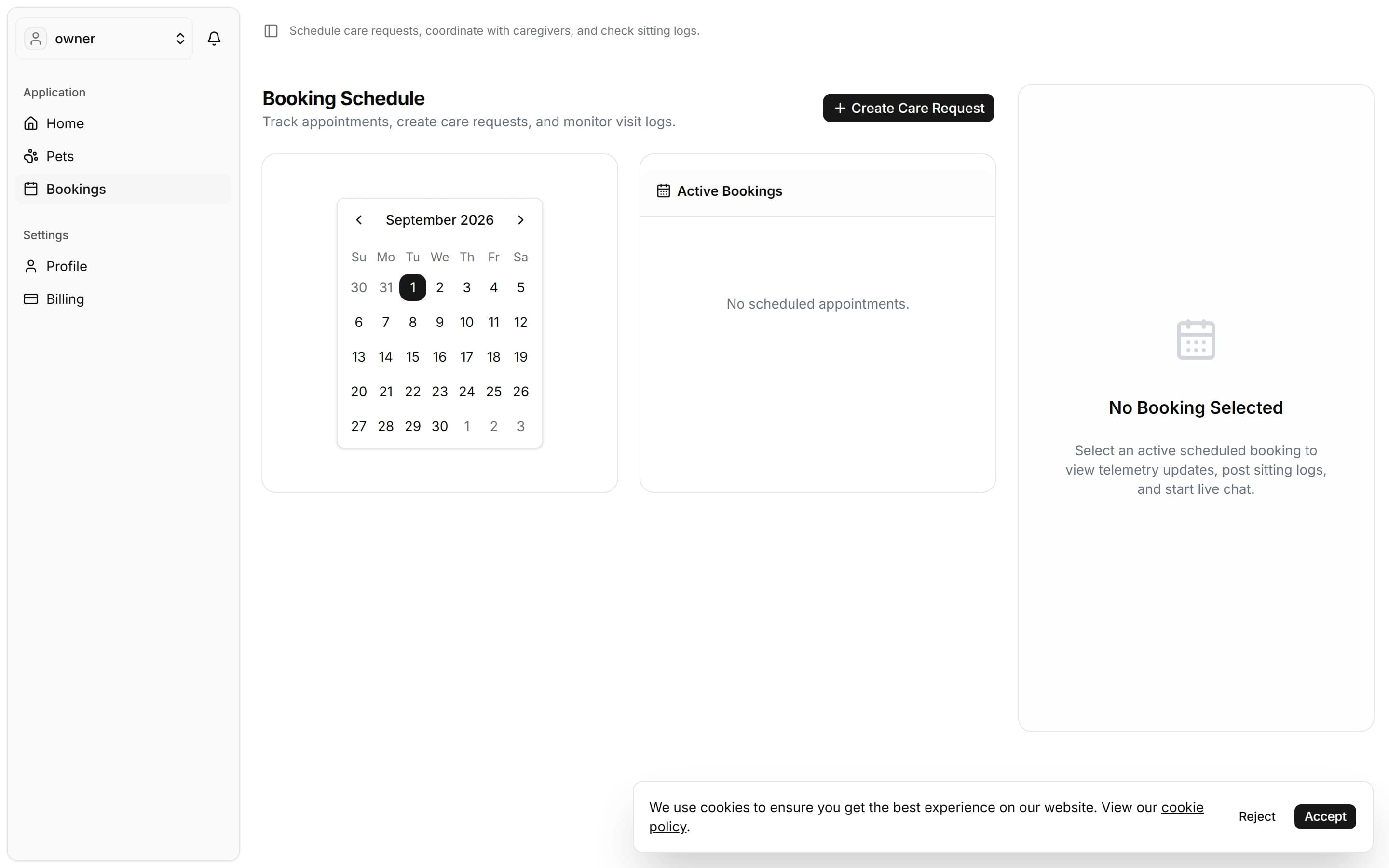
Ask a room of pet sitters what their software's client portal actually does, and you'll hear the same story: it sends invoices, clients ignore it, and everyone falls back to texting. The portal becomes one more login you have to support instead of the client experience you hoped for.
The problem isn't your clients. It's the deal the portal offers them.
Why client portals fail
A typical portal asks the client to: create an account, learn a new app, and check it occasionally — in exchange for seeing things (invoices, booking confirmations) you could have texted them. That's a bad trade, and clients know it. So they don't adopt it, and the "portal" quietly becomes email with extra steps.
There's a second failure mode: portals that exist but feel like a paywall. When the portal is a feature of your subscription, every client login reminds them they're using software they didn't choose. Adoption stays grudging forever.
The deal that works: the portal has to be worth opening on its own
The fix is structural, not cosmetic. The client side needs to be a real product — free, useful, and valuable even when you're not booking. Then your visits and updates ride along inside something the client already has a reason to open.
That's exactly how PetAmigo works:
- Every client gets a free Circle account. A Circle is a pet care hub: pet profiles with feeding, meds, and vet contacts; a shared calendar; and a visit log. It's genuinely useful on its own — the client can coordinate care with family and neighbors in it, whether or not you're involved.
- Your business plugs into their Circle. When you book a visit, your visit log — fed, walked, medication given, or baths and nail trims for grooming clients — appears in the client's Circle automatically.
- Nobody pays per client. You pay $19/month solo or $49/month for a 3-seat Agency plan. Unlimited clients. The client side is free because it's a product, not an upsell.
What clients actually open a portal for
Design your client experience around the three moments clients care about:
- "Is my pet okay right now?" — visit logs with photos answer this without a single "how's he doing?" text.
- "What do I owe?" — invoices in the same place as the updates, with one-tap payment.
- "Who's watching the dog next Tuesday?" — a shared calendar beats a group chat for exactly this question.
Notice what's missing: none of these require the client to care about your software. They care about their pet, their money, and their schedule. A portal that serves those three things gets opened.
The professional payoff
When clients actually use the portal, three things happen:
- You look bigger than you are. Professional updates and clean invoices are how a solo sitter competes with an agency.
- Client info stops evaporating. Vet contacts, medication changes, and gate codes live in the client's profile — updated by the client, not re-collected by you every booking.
- Referrals get easier. A client whose family sees your visit logs every week has already shown your work to their network.
The objection, answered
"Will my clients actually bother signing up?" — they will, if what they're signing up for is theirs. A free Circle that coordinates all of their pet's care, with your professional visits inside it, is a different proposition from a portal that exists to serve your subscription. That's the difference between asking clients to adopt your tooling and giving them something they'd keep anyway.
If you want to see what the client-side experience looks like in miniature, try the free pet care card generator — it's the printable version of a Circle profile. And if you're comparing software, our honest price comparison shows what client portals cost across the market.