Pet sitting is one of the most accessible businesses to start: low startup costs, no required certification in most places, and demand that keeps growing. But "anyone can watch dogs" and "anyone can run a pet sitting business" are very different statements. The difference is the unglamorous stuff — structure, insurance, pricing, and admin — and most guides skip the part that actually kills new businesses: the math on your time.
Here's the complete checklist, in the order things need to happen.
Step 1: Decide what you're selling
Pick one or two services to start. The common combos:
- Drop-in visits — 20–30 minute check-ins for feeding, potty, and play. The easiest first service.
- Dog walking — recurring midday walks; steady weekly revenue.
- Overnight sitting — in the client's home or yours; the highest per-booking revenue ($50–150/night depending on metro).
- Boarding — pets stay at your home; check your local licensing rules first (many jurisdictions treat home boarding as a kennel operation).
You can add services later. Starting narrow makes pricing, insurance, and marketing all simpler.
Step 2: Handle the legal basics
Requirements vary by state and city, but the typical list is short:
- Business registration — a sole proprietorship is the default; an LLC (roughly $35–500 to file) shields personal assets. Note: an LLC does not cover negligence — insurance does that.
- EIN — free from the IRS, needed for a business bank account.
- Business license — most cities/counties require one ($0–550).
- Insurance — general liability plus care, custody & control (CCC) coverage. Standard liability insurance often excludes animals in your care — this is the most common new-sitter mistake.
- A contract — services, rates, cancellation policy, emergency authorization. Get it signed before the first booking.
Step 3: Price for the business you'll have, not the one you have today
Most new sitters price by copying local competitors. The better method is working backwards from what you need to earn:
- Target income — what you need to take home each month.
- Business costs — insurance, software, fuel, supplies (typically $200–500/month).
- Billable hours — visits per week × hours each, minus the unpaid hours (scheduling, invoicing, chasing payments, writing notes).
That third line is where new sitters get hurt. If you spend 10 hours a week on admin — and most solo sitters juggling WhatsApp, a paper diary, and a spreadsheet do — you're paying yourself nothing for a third of your working time. Our free rate calculator does this math for you in about two minutes. For current market rates, see our guide to pet sitting rates and dog walking prices.
Step 4: Get your first clients
The first 10 clients almost always come from the same places:
- People who already know you — friends, neighbors, coworkers. Tell them explicitly what you offer and when.
- Nextdoor and local Facebook groups — where "does anyone know a sitter?" posts appear daily.
- A Google Business Profile — set it up before your first booking; reviews compound from day one.
- Referrals with an ask — after every successful booking, ask. Most sitters never do.
Step 5: Set up your operations before you're busy
This is the step everyone skips, and it's the one that decides whether you scale or stall. The tools you start with become the tools you're stuck with:
- A scheduling system — not a group chat. Double-bookings and missed visits are structural failures of chat-based coordination.
- Client intake forms — vet contacts, medications, feeding rules, collected once, not re-asked every booking.
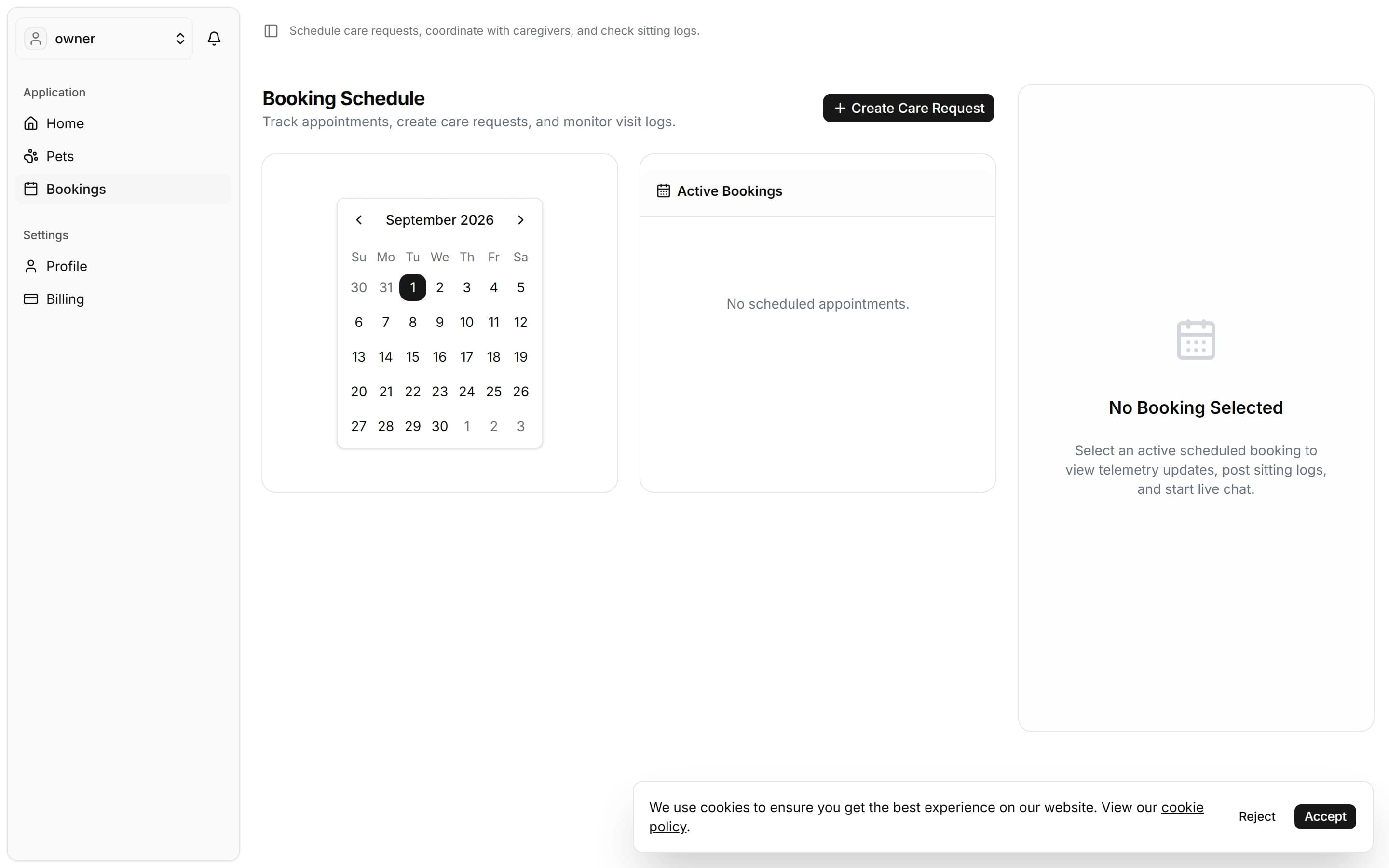
- Visit logs — what happened on each visit, visible to the owner. This is what turns one-time clients into regulars.
- Invoicing with payment links — "just following up on the invoice" texts are the biggest time drain in the business.
You can run all of this on PetAmigo's free tier as a pet owner, and on the $19/mo Solo plan as a professional — flat rate, unlimited clients. If you're comparing options, our honest software price comparison covers the whole market including the per-seat math.
The admin math nobody does
Here's the exercise worth doing before you book your first client. Write down:
- Hours per week you'll spend on visits (billable)
- Hours per week you'll spend on scheduling, chasing payments, and writing notes (unpaid)
- Your target monthly income + expenses
Divide. If the resulting hourly rate makes you flinch, the answer isn't "charge less to get clients" — it's cut the unpaid hours. Admin is the only line item you control, and it's the difference between a $22/hour job and a $45/hour one.
The 30-day launch plan
- Week 1 — register the business, get insured, sign up for a rate calculator and set your prices.
- Week 2 — Google Business Profile, simple website or profile page, decide your service area.
- Week 3 — tell your network, post in local groups, book your first meet & greets (our playbook covers exactly what to do).
- Week 4 — first bookings, visit logs from day one, invoice immediately, ask for the review and the referral.
Start free as a pet owner or sign up for the Solo plan when you're ready to run it as a business.