Your first pet sitting clients almost never come from the internet — they come from the people who already trust you, and from being findable in the places your neighbors already look. The catch: every channel that works for a brand-new business works differently when you have zero reviews. Here's what actually works in year zero, and the pricing trap that quietly kills new businesses at exactly this stage.
1. Set up Google Business Profile before anything else
"Dog sitter near me" is a Maps query, and Google Business Profile is how you appear in it. It's free for service-area businesses — you can add or claim your Business Profile in minutes, define a service area instead of a storefront, and start collecting reviews from your very first clients.
Two setup details that matter for sitters: choose the service-area business model (you visit clients, so you shouldn't publish your home address), and get the category and service list right — "Pet sitter," "Dog walker," "Pet groomer" are how you match local searches. Google's Business Profile setup guide walks through verification.
2. The directories that actually send clients
PSI's Pet Sitter Locator is a free listing for members of Pet Sitters International and is indexed by Google — it's one of the few directories that sends real client inquiries rather than just sitting there. It pairs well with a simple website and one social profile you actually keep updated.
3. Facebook and neighborhood groups
Local Facebook groups and Nextdoor are where "does anyone know a sitter?" gets asked daily. The play is not link-dropping your business — it's being the person who gives useful answers (holiday availability, what to do about a reactive dog, holiday surcharges) until your name is the one that gets tagged when someone asks. One honest, helpful comment a week beats a hundred self-promos.
4. Partnership channels most sitters ignore
- Vet offices and groomers — they get asked "do you know a sitter?" constantly. Drop off cards; offer reciprocal referrals.
- Pet stores and trainers — puppy-class attendees need walkers months before they know it.
- Existing clients' neighbors — the fastest expansion in this business is geographic, not demographic.
5. Ask for the review at the emotional peak
Your first five reviews are worth more than your next fifty. The moment to ask is right after a client says "thank you, she was so happy when I got home" — not a week later. Make it one link and one sentence: "I'm building my business on Google reviews — would you leave a quick one?" More on the system in how to get more Google reviews.
6. Platforms: use them as paid advertising, not a career
Rover and Wag send clients to new sitters with no review history — take the bookings, deliver great service, then convert the best clients to direct bookings over time. You'll pay a platform cut on each booking, which is exactly why your rates need to be set for your costs, not the platform's floor. Treat the platform fee as customer-acquisition cost, and keep your own client list from day one.
7. Referrals start with client #1
Your first client knows other pet owners. The ask is easiest right after a great sit: "I have a couple of slots opening next month — if you know anyone who needs a sitter, I'd love an introduction." A small referral discount for the referring client works better than one for the new client, because the referrer is doing you the favor.
The pricing trap
New sitters routinely underprice to win their first clients — and then get stuck with a client base that chose them for being cheap. The fix: charge the local median from client one (see the current rates guide), compete on reliability and communication instead, and let your reviews accumulate. Bargain clients churn the moment someone cheaper appears; median-priced clients stay because you're good.
When the bookings come, the admin starts
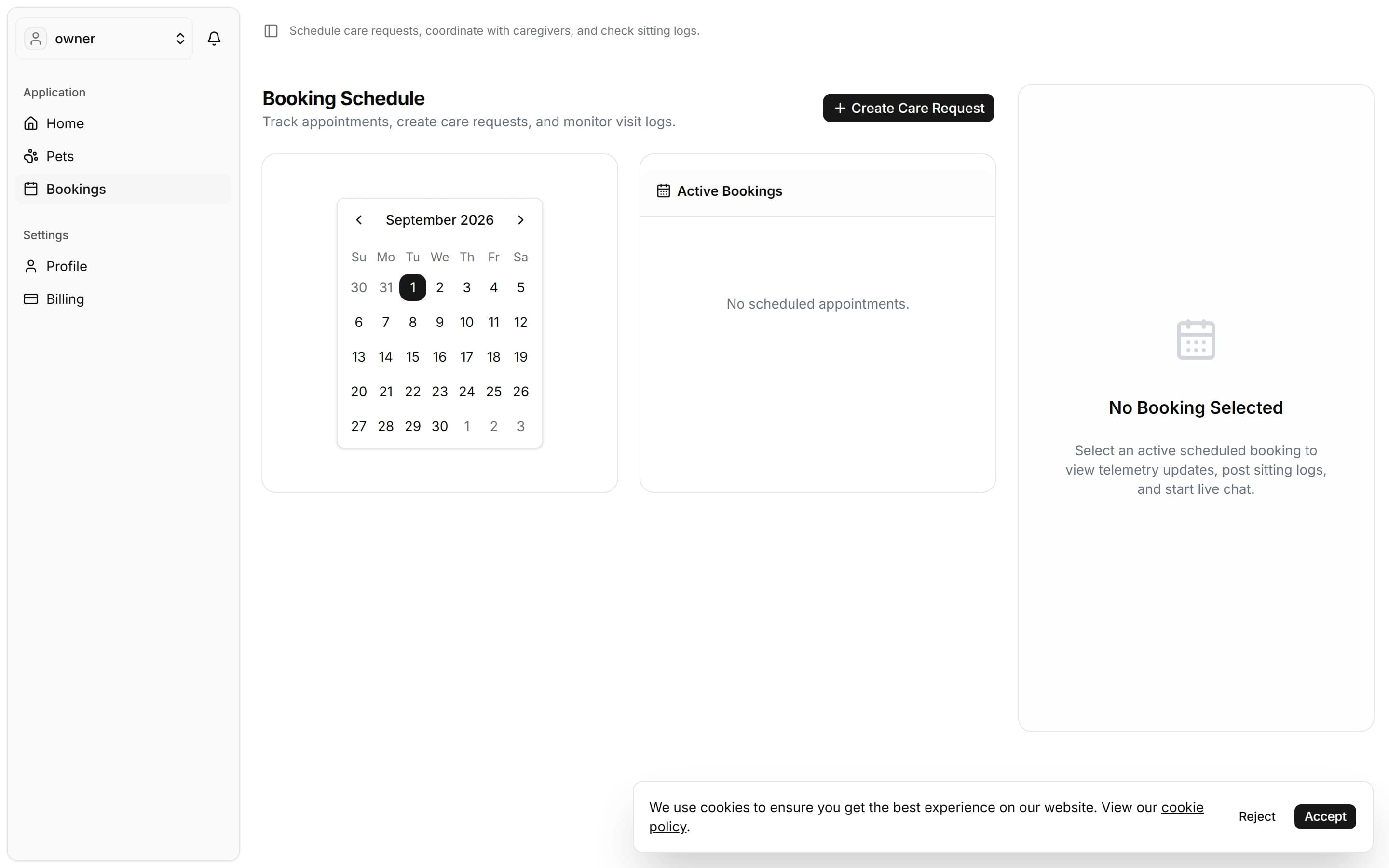
The first clients also bring the first schedule, the first invoice-chasing texts, and the first "what time do I come again?" messages. That's the moment to put the admin in one place — PetAmigo is $19/month flat for scheduling, client management, visit logs, and invoicing, and it's built so your clients can be invited into a free portal instead of another app they resent paying for.